

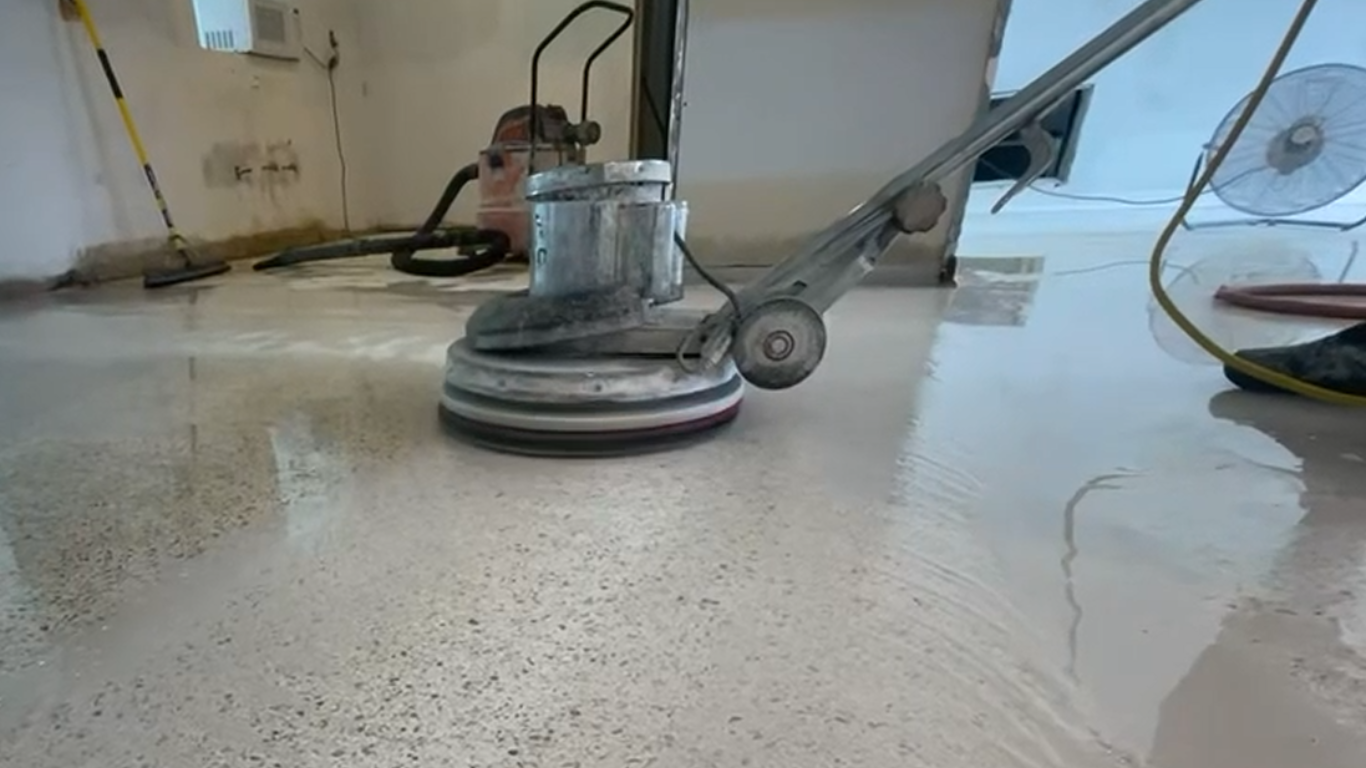
Step-by-Step Process of Terrazzo Grinding and Polishing for a Mirror Finish Floor
A dull, scratched terrazzo floor can make an entire space feel tired, even when everything else is clean and updated. The good news is that terrazzo is one of the most “revivable” surfaces. With the right terrazzo grinding and polishing process, you can bring it back to a crisp, mirror-like finish without covering it up.
Here’s a simple, step-by-step guide on how experts grind and polish terrazzo for a shiny finish. It covers the issues each step fixes and tips for long-term protection.
Why terrazzo loses its shine (and why mopping won’t fix it)
Terrazzo is a durable mix of cement or epoxy binder with decorative aggregates. Foot traffic and grit create a sanding effect, which damages the surface over time. The surface becomes permanently cloudy, uneven, and dirty when harsh cleaners or wax buildup are used.
Common pain points we see:
- Etching and micro-scratches that scatter light, making the floor look hazy
- Lippage (slight height differences between sections) that creates visible lines
- Stains that have soaked into a porous, worn surface
- Cracks and chips that collect dirt and spread with time
- Wax or coating buildup that yellows and traps grime
When the actual surface is affected, even cleaning won’t help. That’s why Terrazzo Grinding and Polishing Services, and at times even Terrazzo Repair and Restoration Services, are required.
Step-by-step terrazzo grinding and polishing for a mirror finish.
While every floor is a little different, the path to a mirror finish follows a proven progression. The goal is to create a flat, uniformly refined surface, then polish it to the level of reflection you want.
1) Inspection, testing, and setting the finish goal
The professional first checks the terrazzo type before starting the grinding process. The team inspects the material’s surface to determine its level of wear, as well as any existing coatings and prior repair work. The final decision about the product’s appearance is made at this point among three finishing options: a high-gloss mirror finish, a satin finish, and a midpoint between the two extremes.
That really works, you’ll end up with a disaster. You may get scratches, really dig up some mish’s aggregate, or leave some other type of film.
2) Site prep and protection
The process of grinding and polishing needs control, but it continues to function as a construction activity. The preparation process needs to protect surrounding walls, baseboards, and transitions while establishing methods to control dust. The majority of crews operate equipment that helps to minimize airborne dust while maintaining control of their workspace. Good prep prevents secondary issues like dust settling into adjacent rooms or slurry splatter on nearby finishes. The active construction process includes controlled grinding and polishing work at this site.
3) Coating or wax removal (if needed)
The removal process needs to eliminate old wax and coatings, as well as uneven sealers, that exist on terrazzo. The process needs to strip away all existing materials on the stone surface, as this procedure requires direct access to the stone. Otherwise, you might end up “polishing the coating.” The process results in uneven wear, creating shiny areas and dull patches on the surface.
This is also where many “mystery stains” disappear once the buildup is gone.
4) Initial grinding to flatten and open the surface
The current stage of work requires extensive physical effort. The surface is ground with coarse diamond tools to remove scratches and etching and to fix unevenness. The step creates a clearer reflection on lippage floors by removing all wavy reflections.
Also, depending on the floor in question, the first grinding could:
- Reveal a new aggregate surface that provides a fresher look to the terrazzo
- Eliminate any deep wear lines
- Provide a uniform canvas upon which to polish
A shiny terrazzo floor can still look “dirty.” This often happens if it wasn’t flattened correctly before polishing.
5) Terrazzo repair and patching where it counts
Once the surface is opened up, cracks, chips, holes, and missing sections become easier to identify and repair correctly. This is where Terrazzo Repair & Restoration work is typically integrated, using repair materials that match the surrounding matrix and aggregate as closely as possible.
Fixing issues as you go helps the patched areas blend in better. This also ensures a more consistent finish. It also prevents small defects from becoming larger failures later.
6) Progressive honing: refining the scratch pattern
Once the first cut is made, the floor is subjected to finer and finer grits of diamond. At each stage, the scratches from the preceding grit are removed, and the floor becomes tighter, until it starts to take on clarity and polish.
This is when patience will serve you well. The lack of patience or skipping grits is one of the key factors that lead to floor swirl marks under the lights.
7) Densification (common on cement-based terrazzo)
In many cases, the flooring material used for terrazzo surfaces is reinforced through a process called densification, which hardens the binder or matrix, making it more durable and easier to polish.
Not every terrazzo system needs the same chemistry, so this step is typically based on what the inspection reveals.
8) Polishing to the mirror finish
The floor is now ready for the high-gloss steps. Fine polishing diamonds and/or polishing compounds are used to achieve a reflective finish. At this point, the terrazzo should look crisp, with depth and clarity, especially under overhead lighting.
A true mirror finish isn’t just “shiny”, it’s uniform. The reflection should be consistent across traffic lanes, edges, and open areas.
9) Sealing or guarding (when appropriate)
You can choose between a penetrating sealer and a protective guard according to your environmental conditions. These products provide stain resistance and simplify cleaning procedures. Your selection should depend on your specific requirements for using the space. The requirements for lobbies, hallways, restrooms, and retail areas differ.
For commercial environments, this step can be a practical way to extend the time between restorative polishing cycles, especially in high-traffic zones.
Actionable maintenance tips to keep the mirror finish longer
After proper polishing of the terrazzo, daily maintenance becomes important. All you need to do is prevent dust from contacting the surface.
These are some good practices that will show an impact:
- Dust mop daily (grit is the #1 cause of micro-scratches)
- Use a neutral pH cleaning solution for polished stone or terrazzo floors
- Do not use highly acidic or alkaline solutions, which can erode the surface
- Ensure that entryway mats are cleaned frequently to prevent the spread of dirt
- Respond to any spills promptly to minimize the likelihood of stains
If you manage a facility, periodic professional maintenance polishing can often prevent the need for more aggressive grinding later, saving downtime and cost.
How does this compare to other polished floor services?
Many individuals find themselves learning about terrazzo restoration when exploring other hard-surface restoration options. Terrazzo restoration is similar to concrete polishing and other types of tile restoration, but it uses different products and techniques.
Related Services at Terrazzo Brothers can be pertinent to consider based on what lies beneath your feet:
- Concrete Staining & Polishing for polished concrete flooring
- Mexican Tile Restoration & Polishing when saltillo or other tiles need to be cleaned and polished
- Epoxy Coating & Polishing for floors that benefit from a durable epoxy system
- Commercial Terrazzo Restoration & Polishing for large facilities that need consistent results across heavy-traffic areas
- Commercial Concrete Staining & Polishing and Commercial Epoxy Coating & Polishing for warehouses, retail, and industrial spaces
If you’re unsure whether your floor is terrazzo or polished concrete, an on-site assessment typically clears it up quickly and ensures the right system is used from the start.
When to call a pro (and what to ask)
A few marks may not always be a problem with normal care; however, if your floor shows signs of haziness, scratches, patchy finishing, or cracks, grinding and polishing are recommended.
Here’s what you should ask when you talk to a contractor:
- How will they handle cracks, chipping, and missing areas?
- How they will polish your floor to get it as shiny as a mirror.
- If you should densify or seal your floor. Clear answers here are a good sign you’ll get a finish that looks great and holds up.
A mirror-finish terrazzo floor is not magic. It comes from a complete process of flattening, repairing, refining, and polishing the surface until every part works together. When done properly, the terrazzo takes on a clean, smooth, and renewed appearance that can completely change the look of the space.
Contact Terrazzo Brothers for a consultation when your terrazzo floors start showing signs of wear. Our professional restoration and polishing services can bring back their shine, strengthen their surface, and help your space look its best
To stay current with us, please follow our Facebook and Instagram pages.
